Free chess game review for Chess.com and Lichess games
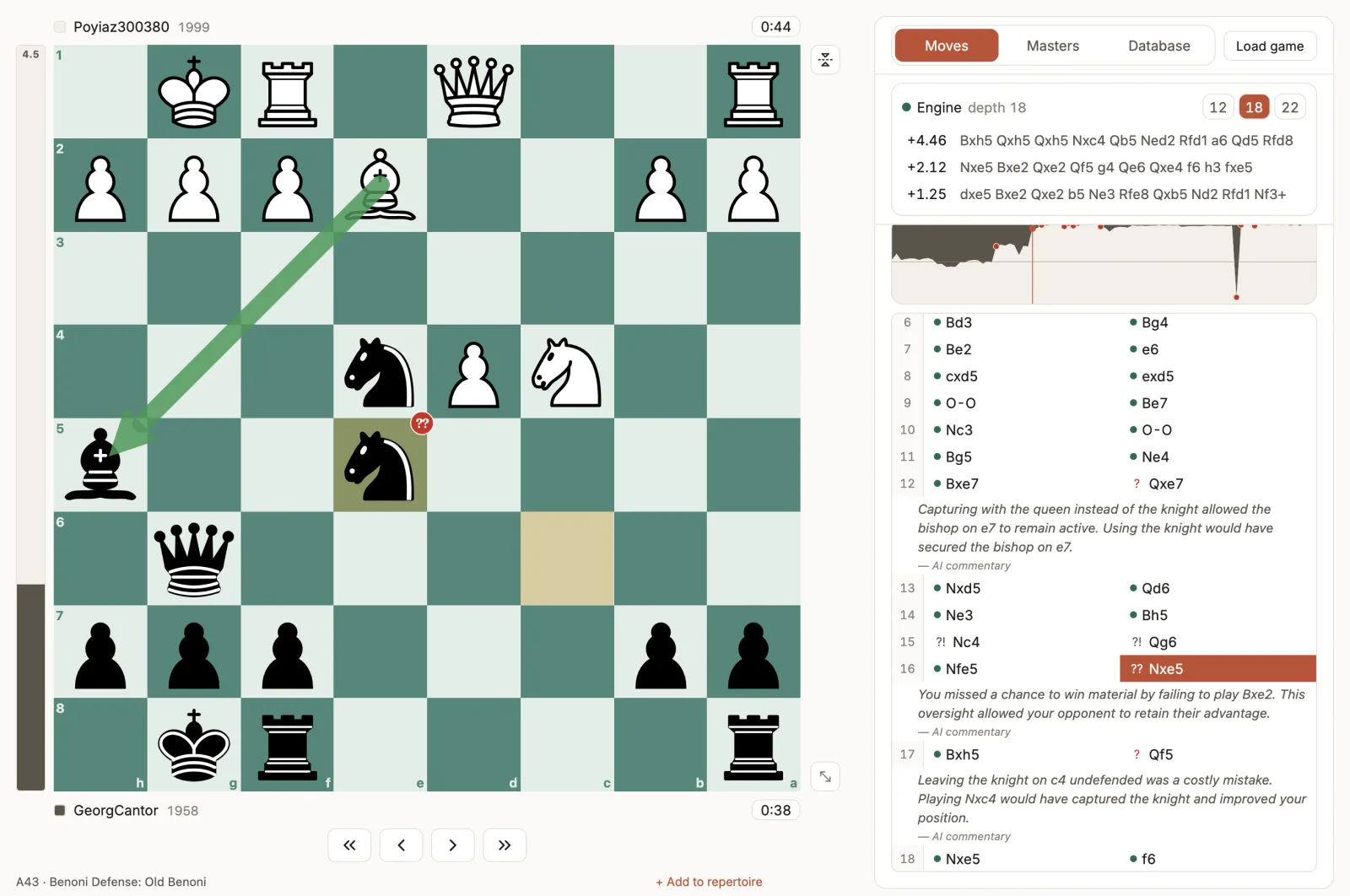
Type your username and pick a game. You will see your accuracy, where the game turned, and why a better move worked. It is free, and you don’t need an account.
14,499 games analyzed so far. You can also paste a game link into the analyzer.
Free lessons
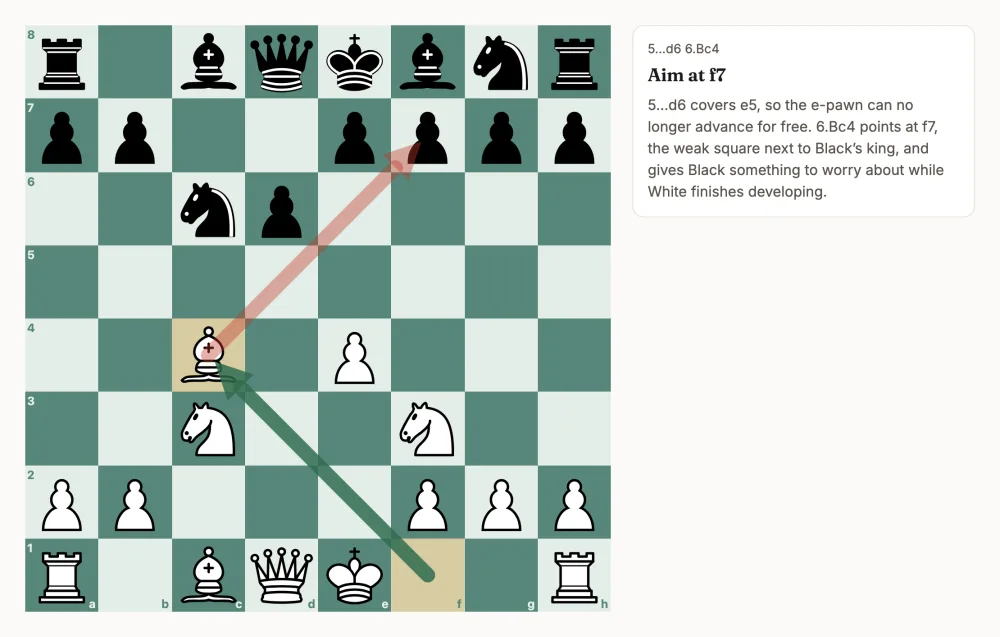
Each lesson explains an idea on the board, checks it with a short quiz, and ends with positions to play out. Lessons work without an account; sign in to keep your progress on every device.
Opening lessons
Learn the plans behind an opening for White or Black, one lesson at a time, then practice the moves.
Browse opening lessons ›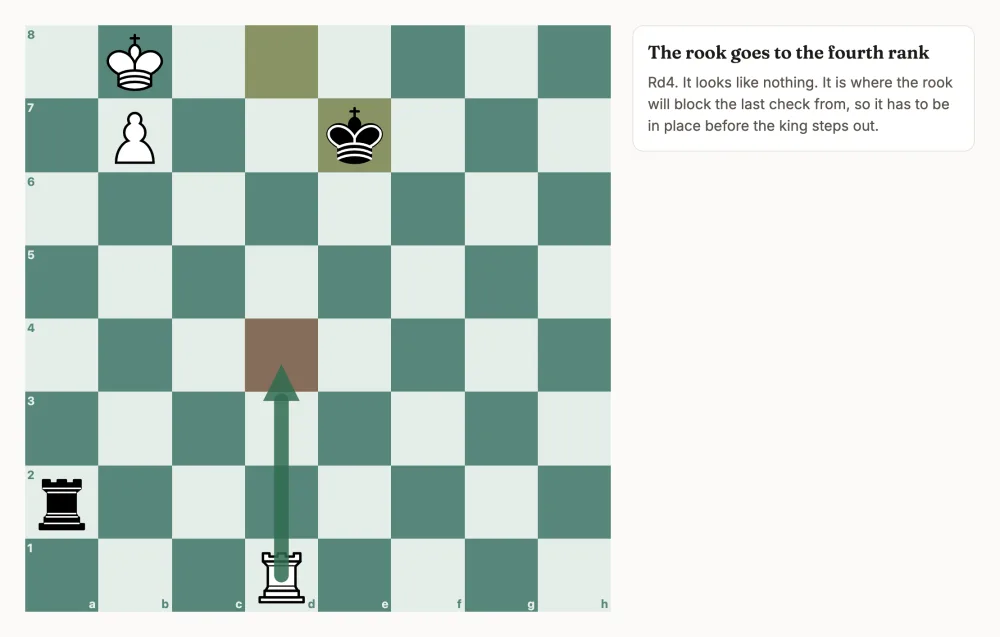
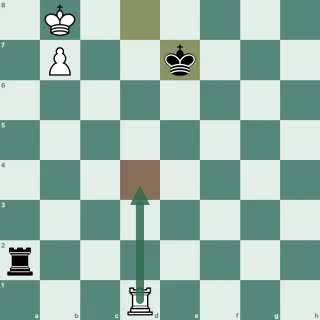
Endgame lessons
Opposition, pawn endings, rook endings and more. Every position is checked against the endgame tablebase.
Browse endgame lessons ›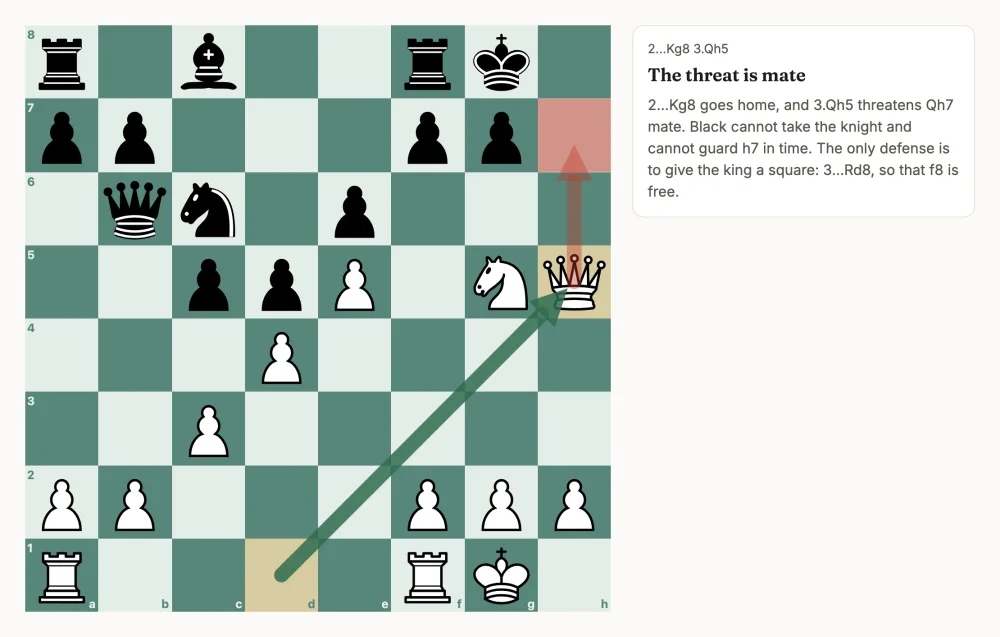
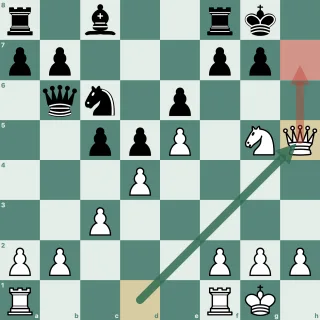
Tactics lessons
Checkmate patterns, attacks on the king, and motifs such as the fork, the pin and the skewer.
Browse tactics lessons ›How the review works
The review runs the same engine pass that members get.
- Type your username
We fetch your ten most recent public games from Chess.com or Lichess. Public games only, with no password.
- Pick a game
The engine checks every move at full depth and marks inaccuracies, mistakes and blunders.
- Read your review
Your accuracy, the turning point, and a plain-English explanation of the better move for each mistake.
Sample reviews
Three real games from a Lichess titled arena. Each link opens the full review as a guest.
With a free account
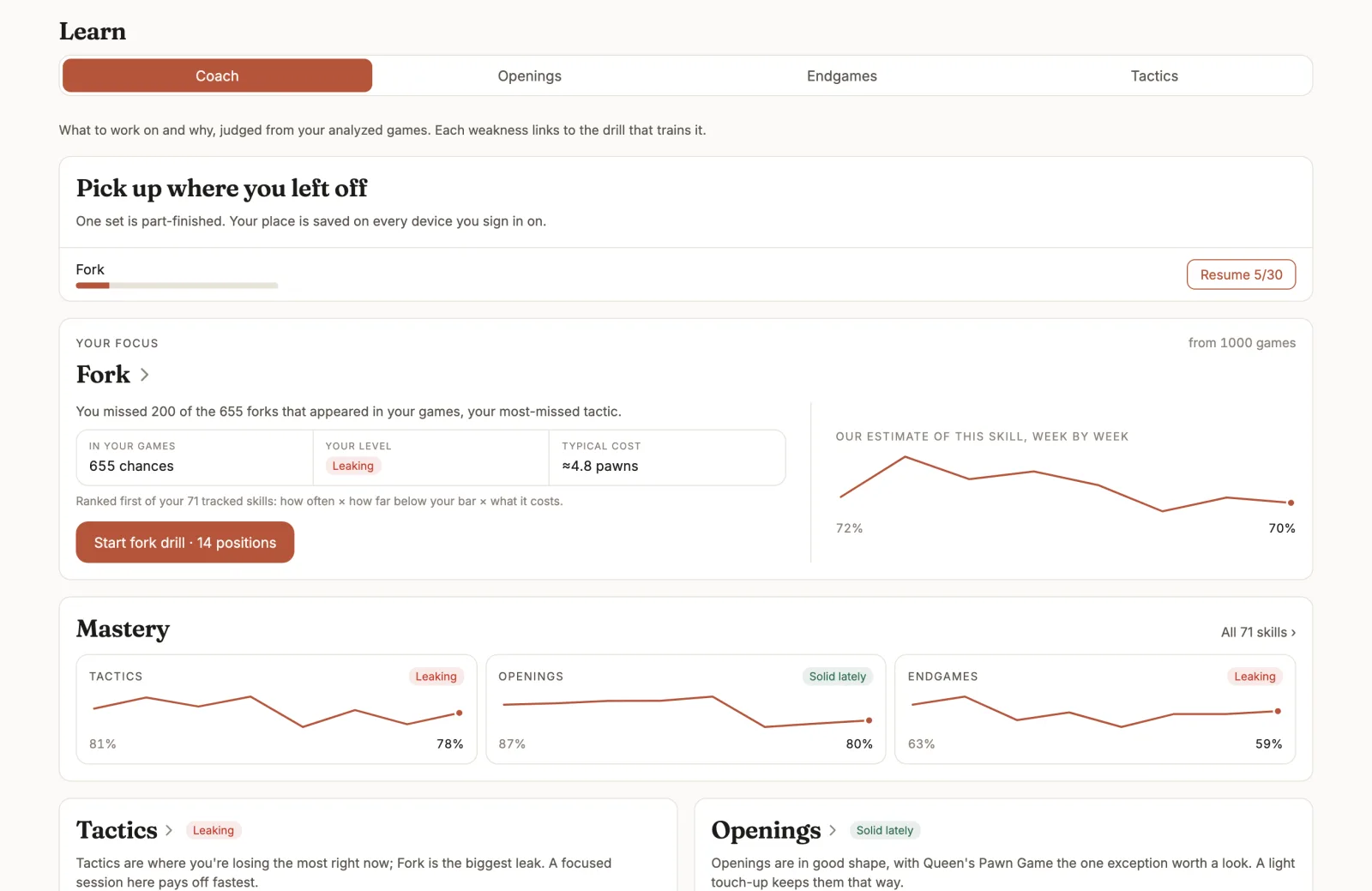
Connect your Chess.com or Lichess username and Elo Hell imports your games, analyzes each one, and builds your training from them.
- A coach built from your games. The Coach ranks the skills that cost you the most, shows the counts behind each one, and gives you a drill for it.
- Puzzles from your own mistakes. Positions where you missed a tactic come back on a spaced-repetition schedule.
- An opening repertoire. Save the moves you want to play, review them on a schedule, and see where your games left your preparation.
- Statistics across your games. Results by opening, clock use, streaks and tilt, and how your winning positions ended.
- Your newest 150 games to start. They are imported and analyzed automatically. Free then imports 20 new games at a time when you ask, with a 24-hour wait after each batch of 20. Plus imports automatically and keeps your newest 1,000 games across sites.
Questions
Is the chess game review actually free?
Yes. Type a Chess.com or Lichess username, or paste a game link, to review a game without an account. Rate limits keep the service responsive.
Can I take lessons without an account?
Yes. Opening, endgame and tactics lessons are free and do not require signing in. Each lesson includes an explanation, a quiz, and practice on the board. Guest lesson progress is saved on this device.
What does an account add?
An account saves your game library and connects your play to personal puzzles, skill estimates, statistics, and an opening repertoire. The lessons and guest game review remain free without signing in.
How does Elo Hell import my games?
Connect your Chess.com or Lichess username. Free brings in your newest 150 games, then imports 20 new games at a time when you ask, with a 24-hour wait after each full batch. Plus imports automatically and keeps your newest 1,000 games. Public games only; no chess-site password is needed.
Will the accuracy match the number Chess.com shows me?
The main accuracy number uses Elo Hell’s own model. The review also labels a Lichess-style estimate and, for Chess.com games, their score when available or a calibrated estimate. These scores can differ.
Connect your Chess.com or Lichess account
Bring in your games and get a daily plan built from them. The review and the lessons stay free without an account.